 Skip to content


Frequently Asked Questions About Epoxy Flooring Installation
Can epoxy flooring be installed over existing tile?
Yes, provided the existing tile is well-bonded. HPS Floors mechanically abrades the ceramic or mosaic tile surface to create the correct profile for ideal adhesion. Because ceramic tile typically has a clay base with the same expansion coefficient as concrete, it serves as an excellent bonding surface once the glazed finish is removed.
What preparation is required before the epoxy is applied?
Proper installation requires a rigorous preparation process:
Mechanical Abrasion: Grinding the surface to the manufacturer’s desired profile.
Cove Preparation: Removing old vinyl coving and taping areas for new integration.
Cleaning: Solvent-wiping the floor to eliminate all loose particles.
Priming: Applying a high-solids epoxy primer to ensure a perfect bond.
What are the benefits of an integrated epoxy cove base?
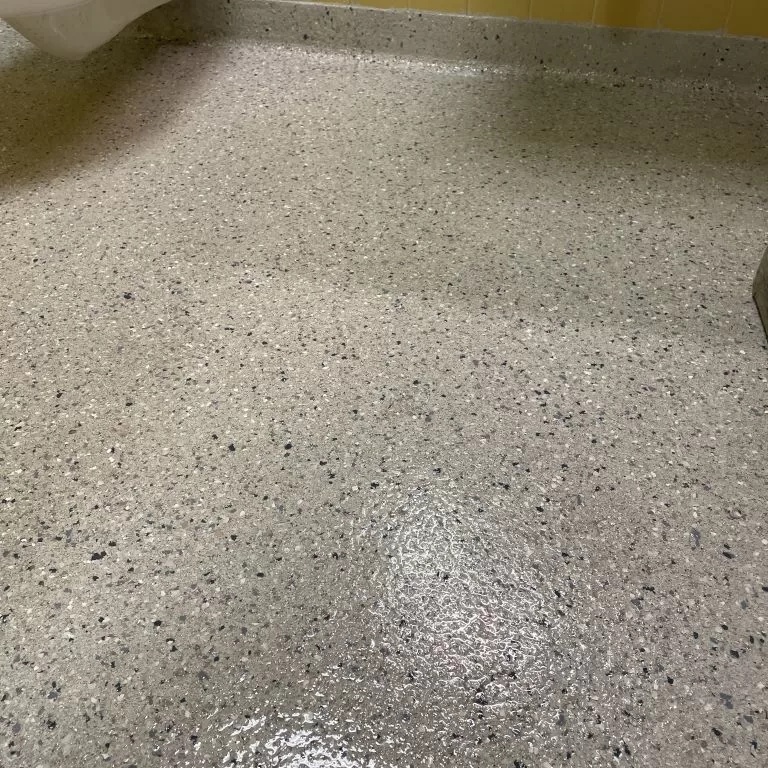
An integrated radius cove base creates a “bathtub” effect that is completely seamless. This is essential for areas exposed to wet conditions (like restrooms or kitchens) because it leaves no seams for dirt to accumulate, prevents soil stains in corners from “lazy mopping,” and helps eliminate potential bad odors over time.
How long does the installation process typically take?
The timeline depends on the specific system and surface condition. However, for projects with tight time constraints, HPS Floors can use fast-curing resins. In one featured school restroom project, these resins allowed the area to be back in service in just two days.
Are there decorative options available for high-durability floors?
Absolutely. HPS Flooring offers many colors and styles, including epoxy flake flooring systems. These systems are aesthetically pleasing while retaining the same industrial durability, chemical resistance, and ease of cleaning as solid-color systems.