...

Durable and Quick To Clean Commercial Kitchen Flooring

URETHANE SLURRY SYSTEMS | THERMAL SHOCK RESISTANT | USDA & FDA COMPLIANT | SLIP-RESISTANT SURFACES

High-performance polymer flooring engineered to endure extreme temperature swings, constant moisture, and aggressive daily sanitation while keeping your facility $100\%$ compliant with state and local health board codes.

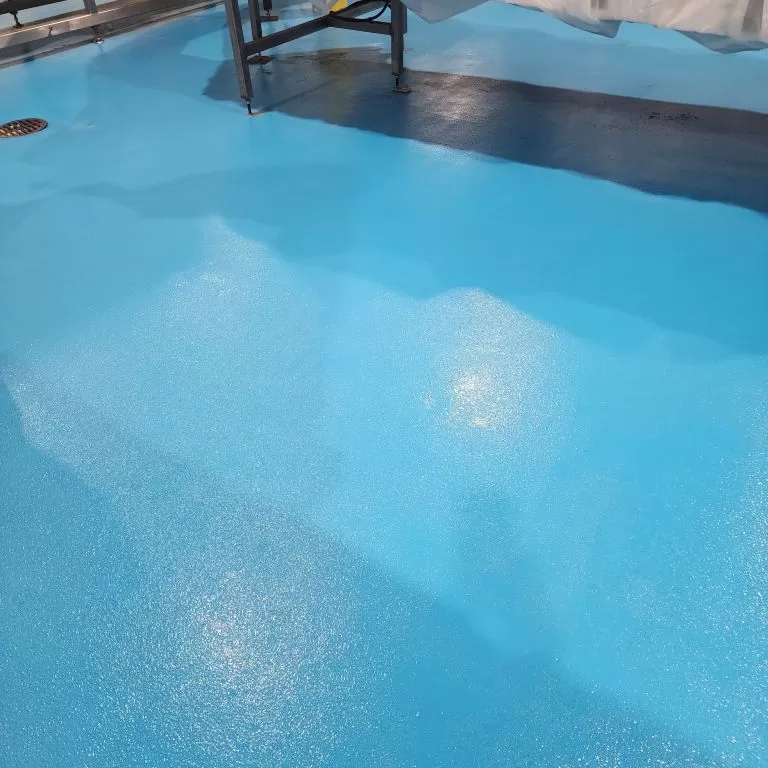
Slip resistant urethane slurry flooring installation in a commercial kitchen facility

DURABLE & EASY-TO-CLEAN COMMERCIAL KITCHEN FLOORING

In the fast-paced environment of a commercial kitchen, standard concrete, tile, or traditional vinyl coatings fail quickly under constant stress. Boiling liquid spills, heavy rolling carts, hot oil drips, and high-pressure steam cleaning degrade porous surfaces, trap grease, and lead to serious bacterial growth and safety hazards.

At HPS Flooring, we engineer heavy-duty urethane slurry flooring systems designed to survive relentless operational demands. From busy restaurant lines to corporate cafeterias and public science centers, our seamless finishes protect your substrate and streamline daily sanitation.

Learn more about our full range of commercial epoxy flooring solutions across New Jersey, New York, and Pennsylvania.

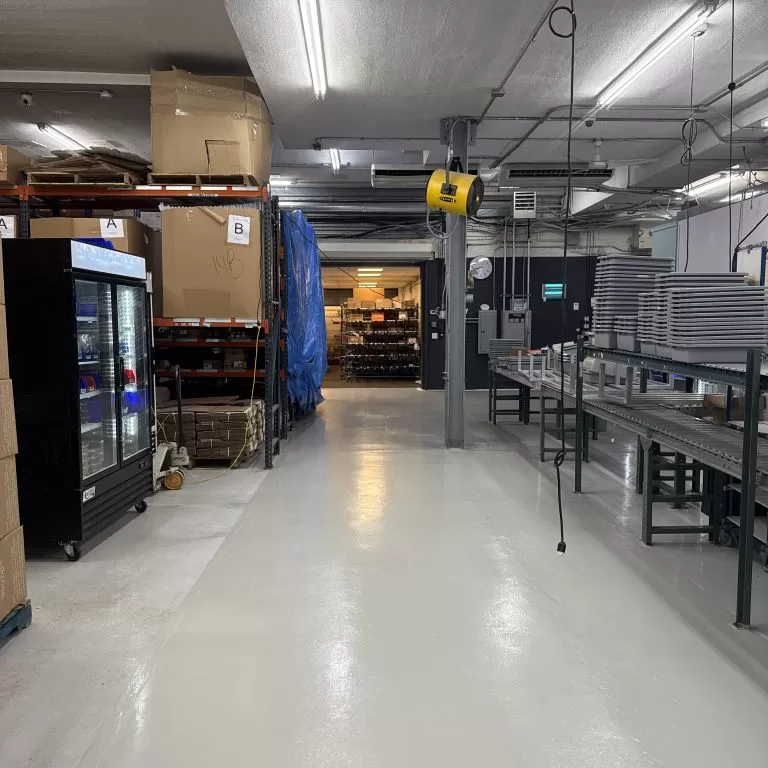
USDA compliant antimicrobial urethane slurry flooring installation in a commercial kitchen

THERMAL SHOCK RESISTANCE FOR COMMERCIAL WASHDOWNS

Commercial kitchen floors undergo constant temperature shifts—from walk-in freezers to boiling water discharges and high-pressure steam cleaning.

Standard epoxy coatings frequently crack and delaminate under thermal stress due to mismatched expansion rates. Our heavy-duty urethane slurry systems expand and contract at the same rate as the underlying concrete substrate. This prevents bubbling, cracking, and loss of bond, ensuring a monolithic, leak-proof finish that withstands intense nightly sanitization.

Local Service Areas

Montclair, NJ: High-durability urethane slurry systems for busy dining and institutional prep zones.

Asbury Park, NJ: Rapid-cure coastal hospitality flooring built to handle peak seasonal rushes.

Morristown, NJ: Slip-resistant, state-compliant resinous coatings for high-volume commercial kitchens.

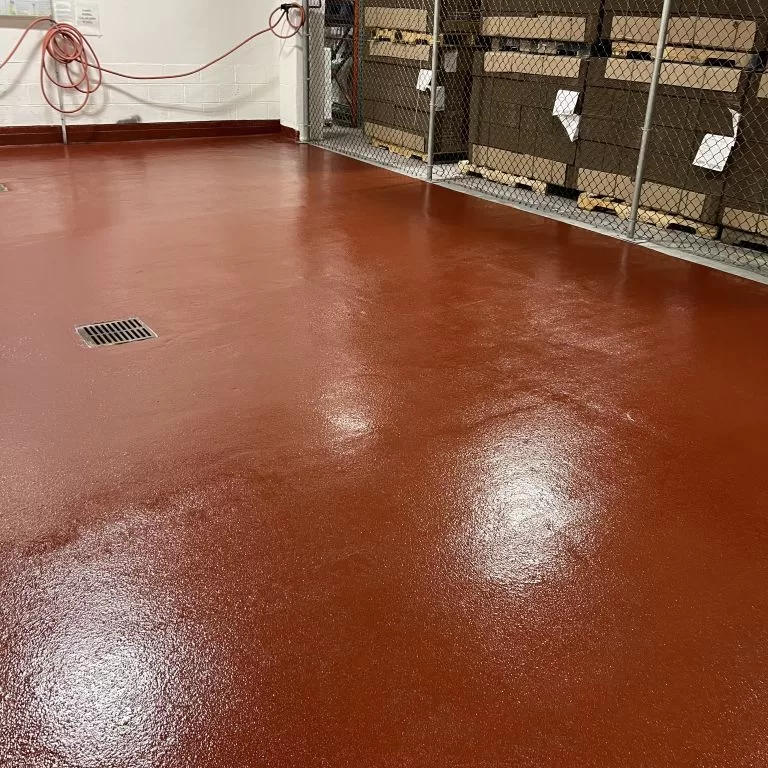
Slip resistant commercial kitchen epoxy flooring installation in New Jersey

OUR 3-DAY INSTALLATION PROCESS: MINIMIZING YOUR DOWNTIME

Closing a commercial kitchen results in lost revenue. That is why our team works flexible hours, including weekends and overnight shifts, to execute complete installations within a tight 3-day window:

Day 1: Substrate Preparation & Mechanical Diamond Grinding: We prep the concrete slab using 800-pound planetary diamond grinders paired with integrated HEPA dust vacuums. This removes old tile glazes, grease, and weak laitance to establish a Concrete Surface Profile (CSP) for a permanent mechanical anchor.

Day 2: Slurry Application & Aggregate Broadcast: We apply our high-adhesion resin slurry and broadcast specialized aggregates (quartz or silica sand) into the wet matrix to build impact durability and custom slip resistance.

Day 3: Chemical Resin Topcoat & Sealing: We seal the system with a non-porous, chemical-resistant topcoat engineered to endure aggressive institutional cleansers, heavy foot traffic, and rolling equipment loads.

HYGIENIC COMPLIANCE & SAFETY IN WET CONDITIONS

Integrated Sanitary Cove Bases: We run the resinous coating $4\text{ to }6\text{ inches}$ up the wall to eliminate hard-to-clean $90^\circ$ floor-to-wall joints where grease and bacteria collect.

Customized Slip Resistance: We adjust surface friction levels during aggregate broadcasting to protect staff from slip-and-fall hazards in wet, oily environments without creating an overly abrasive texture that impedes daily cleaning.

USDA & FDA Compliance: Seamless, non-porous finishes eliminate tile grout lines, preventing organic waste, animal fats, and water from penetrating the floor and creating deep-set odor problems.

Discover how our decorative epoxy flake flooring options utilize seamless coving for administrative, dining room, and restroom transitions.

Frequently Asked Questions About commercial kitchen flooring

Why is epoxy flooring ideal for commercial kitchens?

Epoxy flooring is the preferred choice for commercial kitchens because it provides a seamless, non-porous surface. This design prevents the accumulation of dirt and bacteria, offers excellent resistance to grease and chemical spills, and withstands the high temperatures and heavy traffic common in food service environments.

Can epoxy be installed over existing kitchen tile?

Yes. HPS Floors can apply epoxy over old tile by removing the baked-on glaze to expose the clay base. This process ensures the thermal expansion coefficient matches the concrete, creating a strong bond that “welds” the materials together and eliminates the need to maintain porous mortar joints.

How does the system ensure staff safety in wet conditions?

Safety is a priority in busy kitchens. The commercial kitchen floor system incorporates a broadcast aggregate during the slurry phase. This creates a durable, slip-resistant texture that helps protect staff from accidents even when the floor is wet or greasy.

How long does a typical kitchen floor installation take?

HPS Flooring typically completes an average-sized kitchen installation in approximately three days. Their team works flexible hours to accommodate the production needs and schedules of their clients, minimizing operational downtime.

What are the maintenance requirements for these floors?

Because the surface is seamless and non-porous, maintenance is minimal. Daily cleaning is fast and efficient, requiring only regular sweeping and damp-mopping with appropriate cleaning agents. The resin is specifically designed to resist the harsh cleansers used to meet strict health and sanitation regulations.

What should be done when quarry tile in a kitchen starts cracking and lifting across New Jersey?

Cracked, lifting tile usually needs full removal rather than a patch, since the underlying grout has already failed. HPS Flooring removes damaged tile and installs new commercial kitchen flooring throughout New Jersey, solving the root problem instead of masking it temporarily.

Who has experience replacing kitchen flooring in a large public institution throughout New Jersey?

HPS Flooring completed a commercial kitchen flooring replacement at a major New Jersey science center’s restaurant, swapping out cracked quarry tile for a durable, seamless surface built to handle that kitchen’s high daily visitor volume, heavy equipment use, and constant foot traffic.

Where can a restaurant owner in New Jersey get old kitchen tile assessed for replacement?

HPS Flooring evaluates aging tile on site across New Jersey before recommending commercial kitchen flooring, checking grout condition and subfloor moisture first so the replacement plan actually addresses why the original tile failed in the first place rather than repeating it.

How is slip resistance built into new commercial kitchen flooring during a tile replacement in New Jersey?

An aggregate texture gets broadcast into the topcoat during installation to match or exceed the traction of the old tile. HPS Flooring adds this texture to commercial kitchen flooring across New Jersey replacements, so slip resistance improves rather than declines after the upgrade.