...

The Standard for Commercial Kitchen Flooring in Montclair, NJ

In the demanding environment of a Montclair commercial kitchen, your floor is a critical component of your facility’s safety and hygiene infrastructure. Standard concrete or quarry tile often fails under the combined stress of high-heat washdowns, heavy equipment, and constant moisture.

For a surface that meets stringent health codes and stands up to 24/7 operations, facility managers rely on high-performance epoxy and urethane slurry systems.

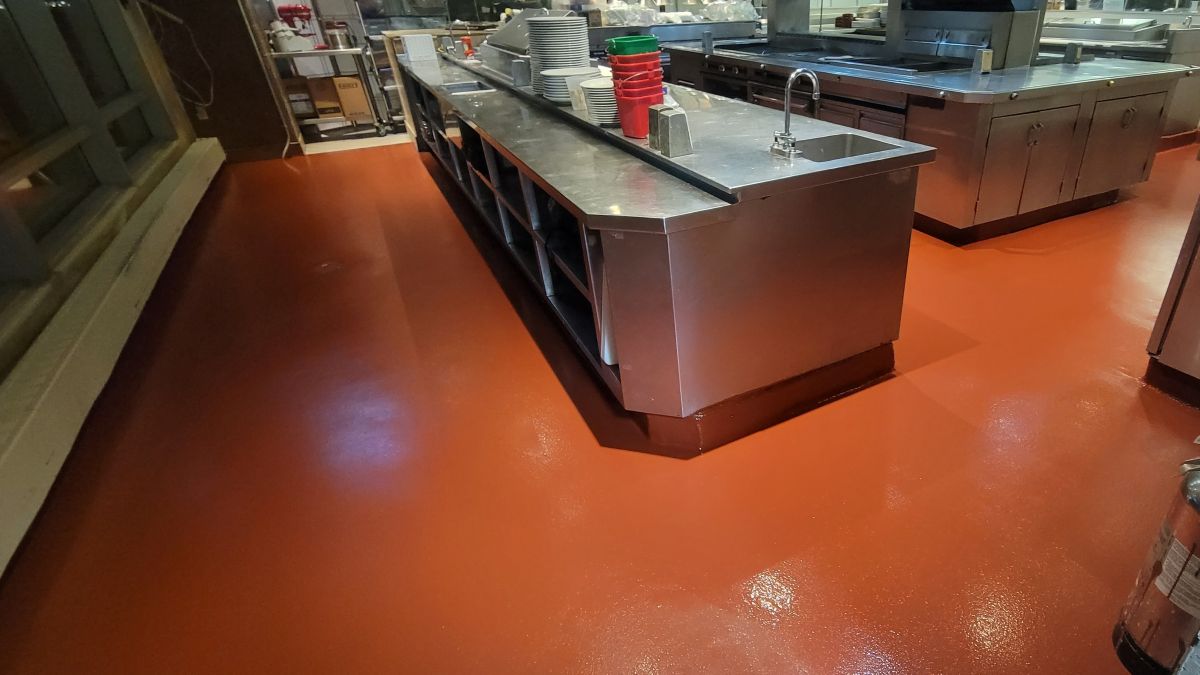
Commercial kitchen flooring installation in Montclair NJ featuring a seamless epoxy system for industrial food prep areas.

Why Montclair Kitchens Require Specialized Coatings

  • Thermal Shock Resistance: From walk-in freezers to industrial-grade dishwashers, kitchen floors face extreme temperature swings. Our urethane slurry systems are engineered to expand and contract with the concrete, preventing the cracking and delamination common in inferior coatings.

  • Aggressive Slip Resistance: Safety is non-negotiable. We customize the texture of every floor using aluminum oxide or quartz broadcast systems. This provides essential traction even when the surface is saturated with water, animal fats, or cooking oils.

  • Non-Porous & Seamless Hygiene: Unlike tile and grout, which harbor bacteria and odors, our seamless floors create an impermeable barrier. This makes them USDA and FDA compliant and significantly easier to power wash and sanitize.

  • Chemical & Acid Durability: Industrial kitchens deal with everything from citric acid to heavy-duty degreasers. Our systems provide a high level of chemical resistance that prevents staining and structural erosion.

Commercial kitchen flooring in Montclair NJ showing a durable, seamless epoxy floor finish in a professional kitchen environment.
  • Leveling Imperfections: Unlike smaller tools, our Sase units level out high spots and prep the floor for a perfectly flat, seamless finish.

Our Technical Approach to Installation

A high-performance floor is only as good as its bond to the substrate. At HPS Flooring, we understand that the longevity of an epoxy or urethane system depends entirely on what happens before the first gallon of resin is poured. While many contractors cut corners with “acid washing”—a method that often leaves moisture and residue behind—or lightweight handheld grinders that only polish the surface, we take a rigorous industrial approach.

The Power of 800-Pound Sase Planetary Grinding

To ensure a permanent mechanical bond, we utilize 800-pound Sase planetary grinders. This heavy-duty machinery is essential for:

  • Removing Contaminants: Deep-cleaning the concrete to remove old coatings, oils, and “laitance” (the weak top layer of concrete).

  • Achieving the Perfect CSP: We grind the slab to achieve a specific Concrete Surface Profile (CSP)—typically a CSP 3 or 4 for kitchen environments. This creates a “toothy” texture that allows the epoxy to anchor itself deep into the concrete pores.

Why We Never Use Acid Washing

Acid etching is an outdated residential shortcut. In a commercial kitchen, acid can soak into the slab, lead to osmotic blistering, or fail to open the pores of high-strength concrete. Our mechanical grinding process is dust-controlled and provides a consistent, superior surface that separates a professional industrial installation from a “temporary fix” that will peel in six months.

Commercial kitchen flooring in Montclair NJ featuring a slip-resistant urethane slurry system for high-traffic food preparation areas.

Frequently Asked Questions

What is the best flooring for a commercial kitchen in Montclair?

For high-volume kitchens, a urethane slurry system is superior to standard epoxy. It offers higher thermal shock resistance (essential for hot washdowns) and better durability against the heavy traffic typical of Montclair’s busy restaurant scene.

How long does a commercial kitchen floor installation take?

Most professional installations, including mechanical preparation with our Sase planetary grinders and multiple coating layers, take 2 to 3 days. We work with your schedule to minimize downtime for your business.

Is epoxy flooring slip-resistant when wet?

Yes. We customize every floor with slip-resistant aggregates like quartz or aluminum oxide. This ensures a safe, high-traction surface for your staff, even when the floor is covered in water or cooking oils.

Does your flooring meet USDA and health department codes?

Absolutely. Our seamless flooring systems eliminate grout lines where bacteria grow, making them USDA, FDA, and local NJ Health Department compliant. We also recommend a cove base for an airtight, easy-to-clean seal between the floor and wall.

Can you install flooring over existing kitchen tile?

While it is possible in some cases, we typically recommend removing the tile and grinding the concrete substrate. This ensures a permanent bond and prevents the “ghosting” of grout lines, providing a much more durable and sanitary result.