...

Durable Commercial Kitchen Flooring in Morristown, NJ: Compliance & Performance

The Standard for Morristown Hospitality & Institutional Dining

Morristown’s vibrant culinary scene—from the historic storefronts near the Green and the bustling cafes on South Street to high-volume institutional kitchens in local corporate centers—demands more from a floor than just aesthetics. These environments are high-pressure zones where flooring must survive constant foot traffic, extreme thermal shifts, and the rigors of daily high-heat washdowns.

For local facility managers and restaurant owners, selecting the right surface isn’t just a design choice; it is a critical balance between operational safety, long-term ROI, and strict NJDOH compliance.

Commercial kitchen flooring installation in Morristown, NJ, featuring a seamless, slip-resistant urethane cement finish.

Thermal Shock: The Hidden Killer of Kitchen Floors

In a busy Morristown kitchen, floors are regularly subjected to “thermal shock.” This occurs when a surface at room temperature is suddenly hit with 200°F+ water from a dishwasher discharge or a tilted stockpot.

The Problem:

Standard epoxy coatings have a different expansion rate than the concrete beneath them. This disparity causes the bond to “snap,” leading to bubbling, cracking, and peeling.

This system is engineered with a thermal expansion coefficient similar to concrete. It breathes and moves with the slab, ensuring the floor remains intact despite rapid temperature swings.

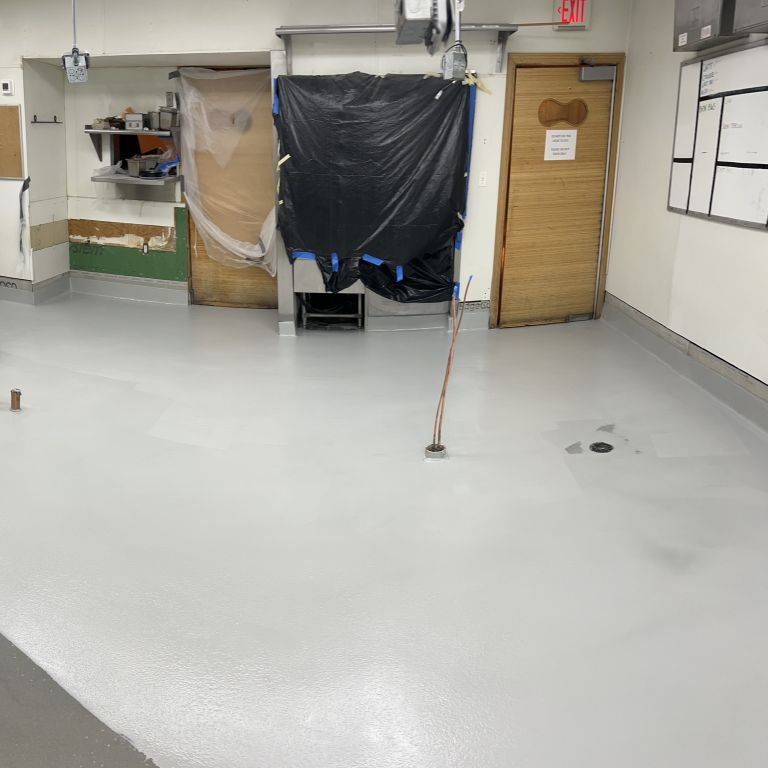
Completed seamless grey urethane cement flooring in a Morristown, NJ commercial kitchen with integrated sanitary coving and a high-gloss finish.

Meeting Morristown Health & Safety Standards

Health inspectors in Morris County look for specific architectural details to ensure a kitchen is sanitary:

  • Integral Coving: Instead of a 90-degree angle where the floor meets the wall (which traps grease and old food), we install a 4-inch or 6-inch coved base. This creates a seamless, bathtub-like effect that is easy to power-wash.

  • Slip-Resistance (COF): Kitchens are inherently wet environments. We utilize specialized aggregates—silica sand or decorative quartz—to provide a customizable “Coefficient of Friction” (COF). This ensures a high-grip surface even when covered in water or cooking oils.

  • Anti-Microbial Properties: Unlike tile grout, which is porous and absorbs bacteria, our seamless systems are non-porous and often infused with silver-ion technology to inhibit the growth of mold and pathogens.

Why Move Away from Quarry Tile?

While once the industry standard, quarry tile is increasingly viewed as a liability in modern commercial kitchens.

  • Grout Failure: Grout is the weakest link. Over time, acidic food waste and harsh cleaners erode grout lines, allowing water to seep under the tiles.

  • Costly Downtime: Replacing a tiled floor involves jackhammering and days of debris. Our fluid-applied systems can often be installed over a weekend, with rapid-cure options, like urethane cement, available to get your crew back in the kitchen by Monday morning.

Industrial kitchen flooring installation in Morristown, NJ, featuring a seamless gray urethane cement finish and integrated sanitary coving.
Commercial kitchen flooring installation in Morristown, NJ, featuring a seamless, slip-resistant urethane cement finish.

Preparation is 90% of the Job

A floor is only as good as the concrete prep. For Morristown projects, we utilize industrial-grade Sase diamond grinders and shot-blasting equipment to remove “laitance” and open the pores of the concrete. This mechanical bond is what separates a professional industrial installation from a DIY coating that will fail within six months.

Pro Tip: Before choosing a contractor, ensure they are familiar with the Morris County Division of Public Health requirements. A seamless floor is a long-term investment in your business’s reputation and safety record.

Frequently Asked Questions

What is the best flooring for commercial kitchens in Morristown?

Urethane cement is the industry standard for Morristown commercial kitchens. Unlike standard epoxy, it is designed for thermal shock resistance, meaning it won’t crack or peel when exposed to boiling water or high-heat washdowns from commercial dishwashers and fry lines.

Are these flooring systems NJDOH and USDA compliant?

Yes. Our systems are designed to meet all NJDOH (NJAC 8:24-6.2) standards. We install seamless, non-porous surfaces with integral sanitary coving, which eliminates the joints and cracks where bacteria, mold, and grease typically accumulate.

How long does a kitchen flooring installation take?

We understand that downtime is a major concern for Morristown businesses. Most commercial kitchen projects can be completed over a weekend or during scheduled off-hours. We offer rapid-cure options that allow for full foot traffic in as little as 12–24 hours after application.

How do you ensure the floor isn't slippery when wet?

Safety is a priority in high-pace kitchen environments. We customize the slip-resistance of your floor by broadcasting specialized aggregates like silica sand or decorative quartz. This provides a high “Coefficient of Friction” (COF) to ensure traction even in greasy or wet conditions.

Can you install new flooring over existing quarry tile?

In many cases, yes. If the existing tile is well-bonded, we can mechanically prep the surface and apply a specialized primer to install a seamless system directly over it. This saves you the significant time and cost of a full demolition while providing a much more sanitary surface.