...

Epoxy Warehouse Floors in New Jersey

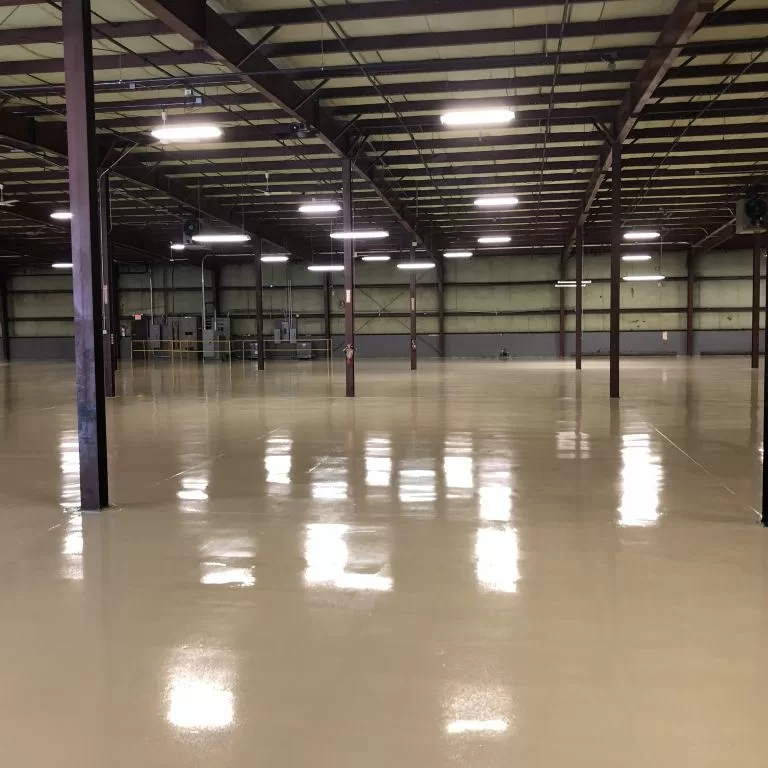
32000 sq ft industrial warehouse epoxy installation in Edison NJ   HPS Flooring

Best Practices for Epoxy Warehouse Floors: Prep & Installation

A seamless epoxy floor relies heavily on precision preparation. HPS Flooring follows a strict multi-step application protocol to ensure maximum mechanical adhesion and long-term performance:

Step 1: Substrate Surface Preparation

  • Mechanical Diamond Grinding: Profiling the concrete slab to ensure complete bonding.

  • Crack & Joint Repair: Repairing deep structural cracks, spalls, and expansion joints with high-strength epoxy fillers before coating.

  • Moisture Vapor Testing: Measuring slab moisture levels and applying specialized moisture-mitigation primers when necessary.

Step 2: System Selection & Customization

  • Multi-Coat Build: Applying a dedicated primer layer, high-build epoxy base coat, and protective topcoat tailored to your operational demands.

  • Polyurethane / Polyaspartic Options: Enhanced UV stability, scratch resistance, and ultra-fast cure times for high-traffic zones.

  • Safety & Anti-Slip Additives: Integrating non-slip aggregates in wet areas, loading docks, and heavy traffic lanes.

Step 3: Application & Curing

  • Precise climate control and timing during mixing and application to guarantee structural integrity and smooth, mirror-like curing.

industrial warehouse epoxy coating edison nj

Maintenance & Ongoing Care Plan

While epoxy coatings drastically lower facility upkeep costs compared to bare concrete, simple routine care extends their service life even further:

Daily Cleaning: Sweep or dust-mop to remove abrasive grit and particulate matter.

Routine Scrubbing: Wash with warm water and pH-neutral, epoxy-safe floor cleaners.

Spill Containment: Wipe up oils or chemicals promptly to maintain traction and prevent surface hazards.

Periodic Restoration: Schedule light topcoat recoats as needed to refresh gloss and abrasion protection without replacing the underlying flooring system.

High gloss industrial epoxy warehouse flooring installed by HPS Flooring in a New Jersey facility

Application & Curing

Follow manufacturer instructions carefully for mixing the resin and hardener; improper mixing or poor timing can compromise the floor’s integrity.

Ensure environmental conditions (temperature, humidity, ventilation) are within required ranges while applying and during curing. Slab moisture, ambient humidity, or low temperatures can affect bonding and curing.

Allow adequate curing time before resuming operations; rushing usage risks damaging the floor surface or compromising durability.

Frequently Asked Questions

Why is epoxy preferred over bare concrete for warehouses?

Epoxy warehouse floors create a tough, seamless, and non-porous surface that protects the underlying slab. Unlike bare concrete, epoxy resists abrasion, heavy forklift traffic, and chemical spills while preventing dust and debris from settling into pores.

What is the best coating system for heavy-duty warehouse use?

For high-traffic environments, a multi-coat epoxy system consisting of a primer, base coat, and topcoat is typically recommended. In areas with extreme temperature fluctuations or UV exposure, HPS Flooring suggests considering a polyurethane or polyaspartic-enhanced topcoat.

How does HPS ensure the epoxy bond doesn't fail?

Longevity depends on meticulous surface preparation. HPS emphasizes thorough cleaning, repairing all cracks/imperfections, and mechanical grinding to create a “profile” for the epoxy to grip. They also perform moisture vapor testing, as excessive moisture is a common cause of peeling or delamination.

Can safety features be integrated into the warehouse floor?

Yes. To improve worker safety, anti-slip aggregates or textures can be added to the coating, which is particularly important in zones where forklifts operate or where wet conditions are common.

What does the maintenance plan for an epoxy floor look like?

While lower maintenance than bare concrete, these floors require:

  • Daily cleaning: Sweeping or dust-mopping to remove abrasive debris.

  • Regular scrubbing: Using warm water and pH-neutral, epoxy-safe cleaners.

  • Periodic inspections: Checking for chips or wear in high-traffic zones to schedule topcoat restorations before the main system is damaged.