...

Industrial Epoxy Flooring for Warehouses in NJ & Tri-State

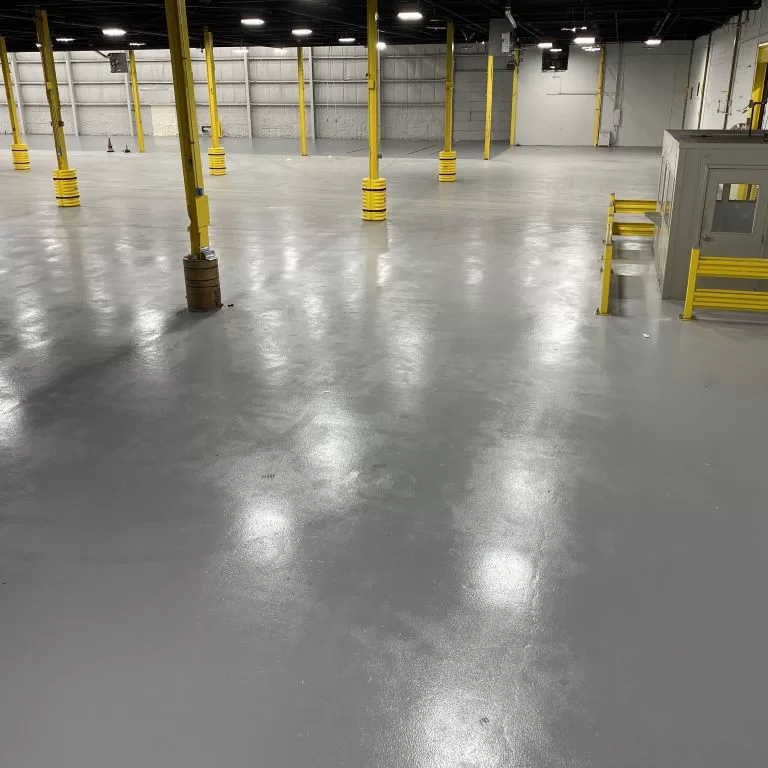
32,000 sq ft warehouse facility in Edison, NJ

Why High-Performance Epoxy Flooring for Warehouse Facilities is a Must

Epoxy flooring for warehouse facilities is the gold standard for creating a safe, durable, and highly productive industrial environment. At HPS Flooring, we specialize in high-performance coatings that are engineered to withstand the extreme stress of heavy machinery, constant forklift traffic, and chemical exposure. Our seamless warehouse solutions not only protect your concrete substrate but also enhance visibility and light reflectivity to improve overall operational efficiency.

In the high-stakes environment of logistics and industrial manufacturing, your floor is more than just a surface—it is a critical piece of infrastructure. Standard concrete floors are porous and prone to cracking, dusting, and staining under the pressure of daily operations. For facility managers looking to protect their investment, HPS Flooring provides industrial-grade epoxy warehouse floors designed to withstand the most demanding conditions.

The primary advantage of choosing a multi-coat epoxy system from HPS Flooring is the sheer durability it adds to your facility. Unlike traditional floor coverings, epoxy creates a seamless, non-porous barrier. We always utilize the best materials, including Sherwin-Williams Resufloor products.

epoxy flooring for warehouse

The Foundation of Warehouse Efficiency

Heavy-Duty Forklift & Pallet Jack Resistance

For heavy‑duty warehouses, a multi‑coat epoxy system (primer → base coat → topcoat) is often best. Thickness, additives (for abrasion, chemical resistance, and slip resistance), and final finish should be matched to expected loads.

In zones exposed to heavy abrasion, UV, or temperature fluctuations — or where additional chemical/weather resistance is desired — a polyurethane- or polyaspartic‑enhanced topcoat may be considered.
Optionally, safety enhancements: add anti-slip aggregates or texture where forklifts or wet conditions are common to improve worker safety.

Built to handle heavy forklift traffic, pallet jack movement, and the impact of dropped items without chipping or peeling.

Chemical Resistant Coatings for Distribution Centers.

Resistant to oils, solvents, and harsh cleaning agents, preventing permanent staining and structural degradation.  

Enhanced for Safety

By incorporating anti-slip aggregates and high-visibility safety markings, HPS helps you maintain a safer environment for your crew.

epoxy flooring for warehouse

The HPS Professional Process

Since 1988, HPS Flooring has specialized in a meticulous installation process that ensures longevity. A common pitfall in the industry is skipping the preparation phase, which leads to coating failure. HPS avoids this through:  

Mechanical Surface Preparation: Using industrial grinding or etching to create a “profile” so the epoxy bonds permanently to the concrete.  

Moisture Mitigation: Testing for moisture vapor emission to prevent delamination and bubbles.

Precision Application: Following strict environmental controls (temperature and humidity) to ensure the resin cures to its maximum hardness.

Long-Term Value and Maintenance

While the initial aesthetics of a high-gloss warehouse floor are impressive, the true value lies in the long-term cost savings. An epoxy-coated floor is incredibly easy to maintain; dust and debris remain on the surface rather than settling into concrete pores. This reduces the need for aggressive scrubbing and minimizes the wear and tear on your cleaning equipment.

With proper care and periodic inspections, these floors can last for decades, providing a bright, reflective surface that even improves facility lighting efficiency.

ndustrial epoxy floor installation for New Jersey warehouse facility.

Frequently Asked Questions

Why is epoxy better than standard concrete for a warehouse?

Standard concrete floors are porous and prone to cracking, dusting, and staining under industrial pressure. HPS Flooring provides epoxy systems that create a seamless, non-porous barrier, protecting the concrete from daily operational wear and structural degradation.

Can the floor handle heavy forklift and pallet jack traffic?

Yes. These industrial-grade warehouse floors are built to handle heavy forklift traffic, pallet jack movement, and the impact of dropped items without chipping or peeling. For maximum durability, HPS typically recommends a multi-coat epoxy system consisting of a primer, base coat, and topcoat.

What safety enhancements can be added to warehouse floors?

To maintain a safer environment, HPS Flooring can incorporate anti-slip aggregates or specialized textures, which are especially useful in wet conditions or high-traffic forklift zones. They also offer high-visibility safety markings to help organize the workspace and protect your crew.

How does HPS prevent the epoxy from peeling or failing?

The company emphasizes a meticulous professional installation process to ensure longevity. This includes mechanical surface preparation (grinding or etching) to create a permanent bond, moisture vapor testing to prevent bubbles, and strict environmental controls during the curing process.

Does an epoxy floor help with facility lighting and cleaning?

Yes. The high-gloss, reflective surface of the epoxy can actually improve facility lighting efficiency. Additionally, because the floor is non-porous, dust and debris stay on the surface rather than settling into concrete pores, which reduces wear and tear on your cleaning equipment and lowers long-term maintenance costs.