 Skip to content
Epoxy Kitchen Flooring | Commercial Restaurant Floors | HPS Flooring
High-Performance Commercial Epoxy Kitchen Flooring
Seamless Sanitation, Safety, and Industrial Durability for Food Service Facilities
In a demanding commercial kitchen environment, choosing the right flooring system isn’t just about appearance—it is a critical requirement for day-to-day safety, strict health code compliance, and structural durability. Traditional floor tiles and failing grout lines trap grease, water, and dangerous pathogens, creating ongoing sanitation headaches and inevitable health department failures.
Our heavy-duty resinous flooring systems deliver a completely seamless, high-performance wear layer designed to eliminate these vulnerabilities entirely. Engineered to bond flawlessly to your concrete substrate, our industrial-grade epoxy and urethane systems withstand the daily punishment of thermal shifts, constant foot traffic, and aggressive chemical cleanings to keep your operational velocity moving forward.

Thermal Shock Resistant Kitchen Floors: Built to Endure the Line
Standard floor coatings frequently fail when subjected to the extreme temperature fluctuations common in commercial food service and preparation environments. When a high-temperature kitchen line shifts from freezing walk-in cooler storage temperatures to a blistering hot water washdown, standard epoxy can quickly become brittle, crack, and delaminate from the substrate.
Our specialized urethane mortar systems are specifically engineered to eliminate thermal shock failures:
Unified Thermal Expansion: Formulated to possess a coefficient of thermal expansion similar to the underlying concrete substrate. This allows the entire floor to expand and contract in perfect unison, preventing the cracking, peeling, and bond failure that leads to bacterial growth.
38 Years of Installation Experience: With nearly four decades of technical expertise, our crews ensure a flawless application built to survive rigorous industrial cleaning cycles and strict regulatory audits.
Compressive & Tensile Strength: Built with over 10,000 psi of compressive strength, easily handling the immense rolling loads, heavy equipment traffic, and physical impact of a fast-paced commercial cook line.
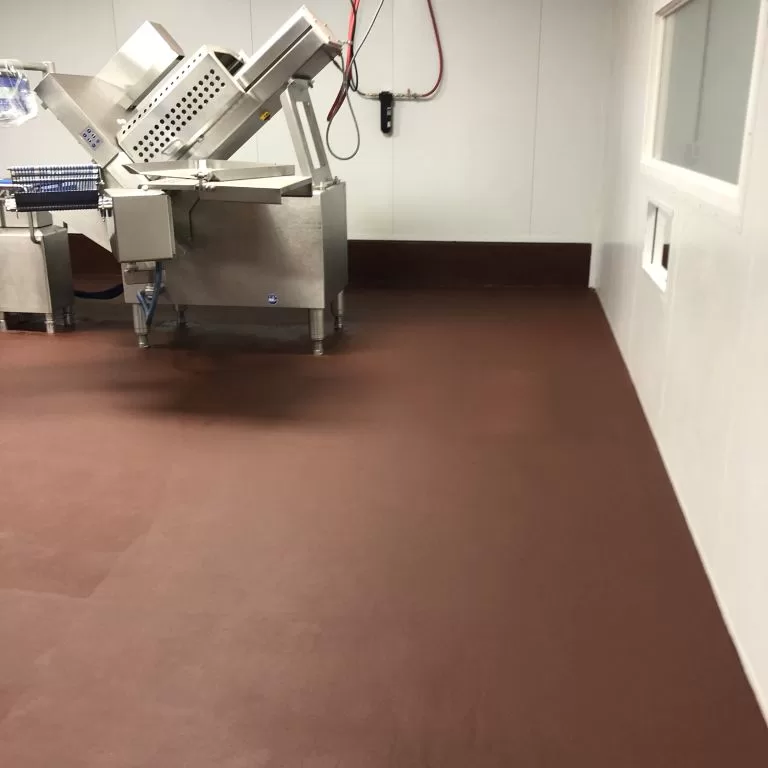
The Ultimate Defense for Commercial Food Safety & Compliance
Integrated Radius Cove Base: By extending the flooring seamlessly up the wall-floor junction, we eliminate the sharp corners where bacteria, grease, standing water, and contaminants typically pool. It also prevents your maintenance team from accidentally sweeping soil and washdown water into wall seams, eliminating deep-seated stains and foul odors.
- Customizable Non-Slip Aggregates: We lock a durable, slip-resistant aggregate texture directly into the system. This aggregate can be customized to your precise operational needs, maximizing employee traction under slick, greasy, or wet conditions while remaining exceptionally easy to mop, squeegee, and sanitize.
Frequently Asked Questions
What makes epoxy a good choice for commercial kitchens?
Epoxy kitchen flooring provides a seamless, durable, and chemical-resistant surface. It is specifically engineered to handle the heavy foot traffic, hot grease spills, and frequent high-pressure cleaning common in busy restaurant environments.
Can epoxy flooring be installed over existing kitchen tiles?
Yes. This system can be applied over “sound and bonded” tiles, which helps eliminate the mess and cost of a full floor removal. For occasional loose tiles, HPS Flooring uses epoxy mortar to patch and create a long-term, stable solution.
What are the benefits of an integrated radius cove base?
An integrated radius cove base extends the flooring slightly up the wall, eliminating sharp 90-degree corners. This prevents bacteria and contaminants from collecting in crevices and stops maintenance teams from sweeping soil and water into corners, which often causes stains and odors.
How safe is the floor when it is wet or greasy?
These epoxy floors include a customizable non-slip additive or aggregate texture. This can be specified to your exact operational needs to provide safety and traction under wet conditions while remaining easy enough to mop and sanitize.
What is the typical installation and cure time?
While times vary based on temperature and product specs, a kitchen floor is typically ready for light traffic within 24 hours. Full heavy-duty operations can usually resume within 72 hours under normal conditions, minimizing the downtime for your business.