 Skip to content
Industrial Acid Resistant Flooring in NJ | Corrosion-Proof Systems
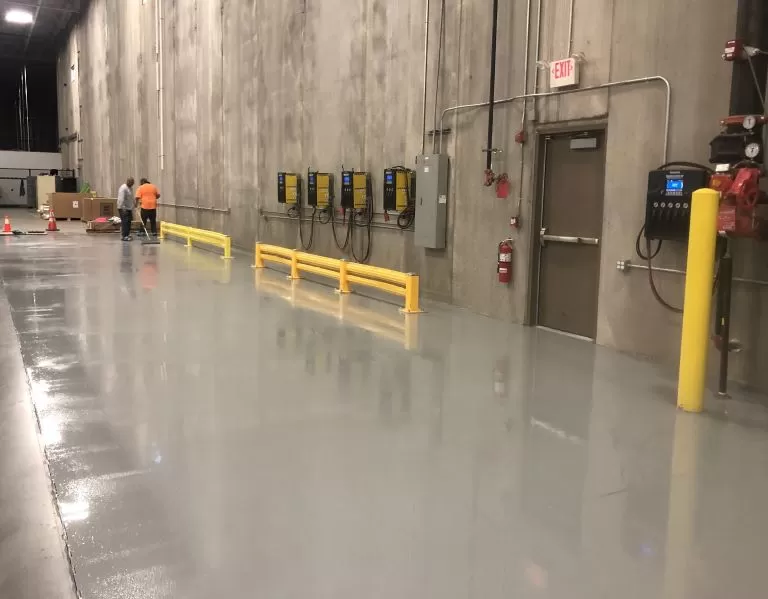
Because the level, concentration, and temperature of chemical exposure vary widely, choosing the wrong resin chemistry leads to rapid floor delamination and accelerated failure. As an independent, family-owned business for over 38 years, we aren’t tied to a single manufacturer. We hand-select the absolute best chemistry for your specific facility needs:
Novolac Epoxy Systems: Engineered specifically for high-concentration acids, such as protecting bare concrete in warehouse battery charging rooms from devastating sulfuric acid erosion.
Vinyl Ester Resins: Specified for extreme environments dealing with aggressive oxidizing agents, continuous thermal shock, and severe chemical processing lines.
NO RESIDENTIAL PLEASE
RESILIENT PROTECTION: REPAIR & RESTORATION FOR CHEMICAL ENVIRONMENTS
An industrial warehouse floor coating exposed to harsh chemicals demands an absolute flawless substrate. What should you do when warehouse concrete is damaged by chemicals? If your facility’s concrete has already suffered from chemical erosion, asset replacement isn’t your only option. At HPS Flooring, we specialize in high-performance concrete remediation that restores structurally compromised slabs to like-new condition before applying our advanced chemical barriers.
Why an Advanced On-Site Evaluation is Mandatory
Because every facility deals with different “bad actors,” there is no such thing as a one-size-fits-all acid-resistant floor. For example, the specialized Novolac resins we install in warehouse battery charging areas are specifically engineered to stop sulfuric acid. However, a chemical manufacturing line might require a vinyl ester system.
How long can acid-resistant flooring last?
When properly specified and installed—which requires aggressive mechanical surface preparation using 800-pound planetary diamond grinders and exact curing times—these durable resinous systems are engineered to last 10 to 20 years or more, drastically reducing your long-term facility maintenance costs.
Why is proper material specification so important?
If the resin chemistry doesn’t perfectly match your operational exposure, the system will fail. The wrong material leads to rapid blistering, floor delamination, and deep concrete contamination. As an independent, family-owned business for over 38 years, we aren’t bound to one manufacturer; we hand-select the exact industrial-grade compounds required to solve your specific headache areas.

Corrosion Resistant Flooring That Exceeds Your Needs
Choosing the right protective chemistry is the difference between a facility that stays up and running and one facing catastrophic structural failure. At HPS Flooring, we bring over 38 years of hands-on expertise to every commercial installation, ensuring your specialized environment stands up to daily abuse while strictly meeting local and federal compliance standards.
Is corrosion-resistant flooring limited to epoxies?
No, high-performance corrosion protection is not limited to standard epoxies. Depending on your facility’s unique chemical exposure and temperature profiles, we specify a wide range of advanced resinous systems, including high-solids Novolac epoxies, heavy-duty vinyl ester resins, and thermal-shock-resistant urethane cements.
Should corrosion-resistant flooring be applied in mechanical rooms?
Yes, mechanical rooms frequently require specialized chemical-resistant barriers. These environments are routinely exposed to aggressive bad actors like battery acids in forklift charging zones, harsh cooling tower chemicals, hydraulic fluids, and severe mechanical room washdowns that quickly erode raw concrete.
What maintenance is required for a corrosion-resistant flooring system?
To maximize the 10 to 20+ year lifespan of your system, we recommend implementing a regular maintenance routine. This includes prompt cleanup of chemical spills, utilizing compatible pH-neutral and non-abrasive cleaning agents, and scheduling periodic inspections to address minor physical impacts before they compromise the chemical barrier..
Our Independent Guarantee: Because HPS Flooring is a family-owned, completely independent contractor, we are never locked into a single manufacturer’s product line. We evaluate your exact operational challenges and hand-select the absolute best industrial-grade compounds available on the market today.
Frequently Asked Questions
What is acid-resistant flooring?
Acid-resistant flooring is a specialized resinous flooring system designed for environments exposed to corrosive substances like sulfuric acid, alkalis, or contaminated liquids. These systems create a protective barrier to prevent the “bad actor” chemicals from eroding or contaminating the concrete slab.
Where is this type of flooring commonly used?
Common applications include battery charging rooms in warehouse facilities, manufacturing and production areas with corrosive processes, and mechanical rooms. HPS specifically highlights the use of novolac resins for battery stations to protect concrete from sulfuric acid.
How does HPS Flooring determine the right resin for a project?
Because chemical exposure varies by concentration, temperature, and exposure time, HPS Floors conducts a detailed consultation. They assess the severity of the corrosive environment and work with material providers to specify high-performance chemistries like novolac or vinyl ester.
What is the expected lifespan of these floors?
When properly specified and installed—including professional surface preparation and curing—these durable resinous systems are engineered to last 10 to 20 years or more, depending on the intensity of the chemical exposure.
What maintenance is required for corrosion-resistant systems?
To extend the life of the floor, HPS recommends:
Prompt cleanup of all chemical spills.
Using compatible cleaning agents (pH-neutral and non-abrasive).
Conducting periodic inspections for signs of wear or damage to prevent chemical attacks on the underlying structure.