 Skip to content


Frequently Asked Questions About Commercial Kitchen Flooring Red Bank NJ
Are your kitchen floors compliant with Red Bank health department codes?
Yes. Our urethane cement and epoxy systems are specifically designed to meet USDA, FDA, and local New Jersey health department standards. Because the surfaces are seamless and non-porous, they eliminate the grout lines where bacteria typically grow, ensuring your facility passes inspections with ease.
Can you install new flooring without closing my restaurant for a week?
We understand that downtime is lost revenue in Red Bank. We offer fast-curing resinous systems that can often be installed over a weekend or during scheduled off-hours. Depending on the system, foot traffic can often resume in as little as 12–24 hours.
How do you handle moisture issues in older Red Bank commercial buildings?
Many historic buildings in downtown Red Bank have high moisture vapor transmission in their concrete slabs. We perform professional moisture testing and, if necessary, apply a moisture-vapor barrier before the final coating to prevent bubbling or delamination, ensuring a lifetime bond.
Is the flooring slip-resistant for a fast-paced kitchen environment?
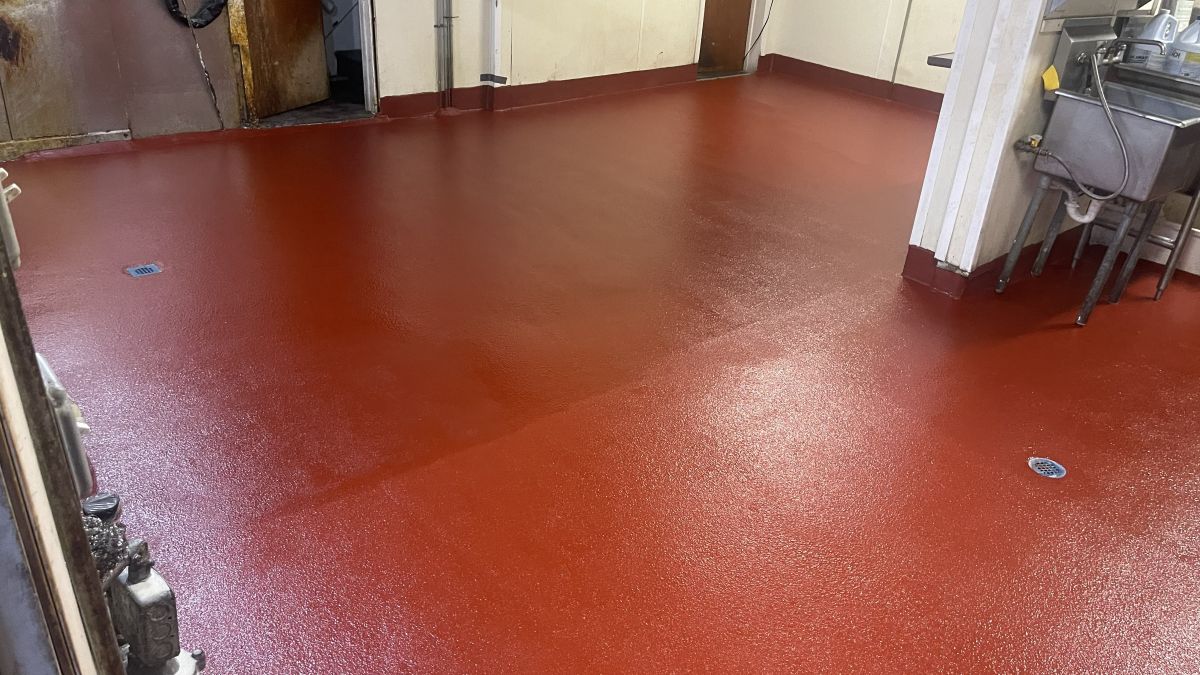
Absolutely. Safety is a top priority in busy hospitality environments. We customize the texture of your floor using specialized aggregates to provide maximum slip-resistance, even when the surface is wet or greasy, helping to reduce workplace accidents.
Why is urethane cement better than quarry tile for a commercial kitchen?
Unlike quarry tile, which has thousands of porous grout lines that crack and harbor bacteria, urethane cement is a seamless monolith. It is also superior in handling “thermal shock”—the extreme temperature changes from hot ovens and boiling water to cold washdowns—which causes tile to pop and crack.