...

Easy To Clean Laboratory Flooring

USDA & FDA Compliant
ISO Cleanroom Standards
Antimicrobial & Non-Porous
ESD (Electrostatic Discharge)

Why High-Performance Laboratory Flooring is Essential for Your Facility

Laboratory flooring must meet rigorous standards for safety, durability, and hygiene to maintain a controlled environment. At HPS Flooring, we provide high-performance, seamless solutions designed specifically for the unique demands of research facilities and medical labs. Our flooring systems offer the best in sterile environments, ensuring a chemical-resistant and easy-to-clean surface that stands up to heavy foot traffic and equipment.

laboratory flooring
What makes laboratory flooring different from standard commercial flooring? Laboratory flooring must meet significantly higher performance requirements, including chemical resistance, seamless construction to avoid contaminants, slip‑resistance for safety, ESD (electrostatic discharge) control in sensitive environments, and compatibility with rigorous cleaning/disinfection protocols. Our laboratory flooring is durable and easy to clean. Making it a great return on investment.
Why should we choose epoxy or resinous flooring for a laboratory environment? Epoxy and resinous flooring systems provide a seamless, non‑porous surface that resists spills of chemicals, solvents, acids, and alkalis — critical in lab settings. They support hygienic environments and are easier to clean and maintain compared to tile or vinyl systems

NO RESIDENTIAL PLEASE

Factors to Consider When Choosing Epoxy Laboratory Flooring

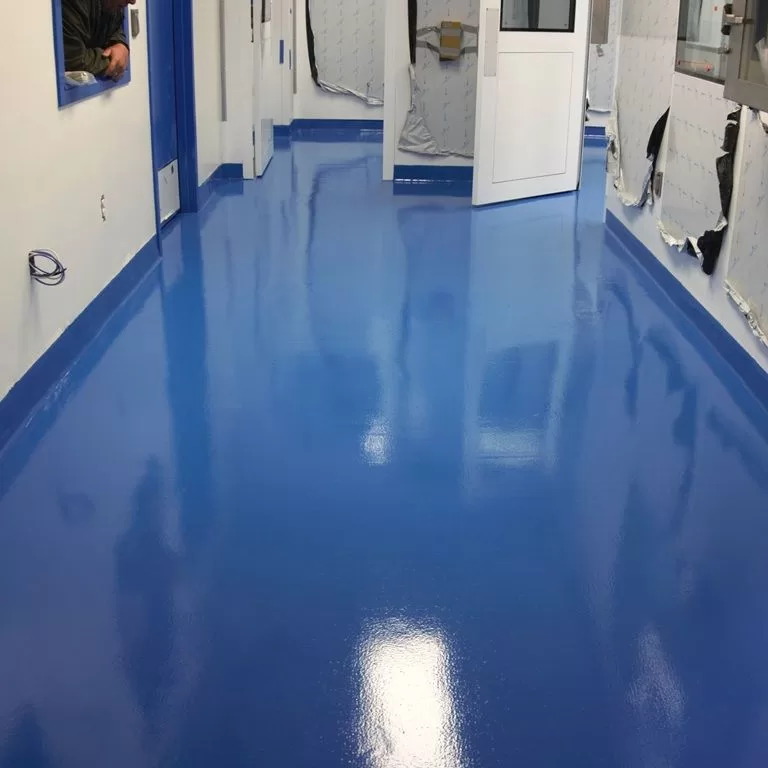
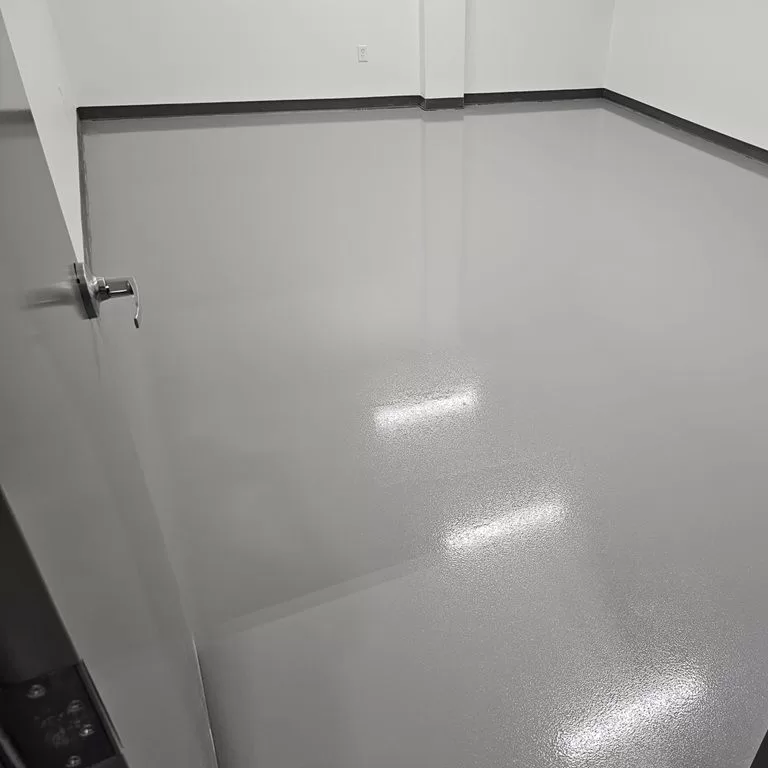
Epoxy laboratory flooring is renowned for its emphasis on a sterile environment, particularly in pharmaceutical settings. Epoxy flooring provides virtually every requirement that meets, if not exceeds, those expectations. Our epoxy floor system is non-porous, eliminating the possibility of trapping dirt or absorbing contaminants.

Furthermore, the integrated coving eliminates trapping dirt at the perimeter.
In addition, are lab flooring systems smooth and seamless to avoid dirt traps? our lab flooring systems are smooth and seamless, leaving nowhere for dirt to get trapped within the flooring system. This floor is very chemical-resistant, reducing concerns for staining and spills.

What is the typical installation process for laboratory‑grade flooring? The process begins with substrate assessment and preparation (including shot‑blasting or diamond grinding, crack and joint repair, and moisture mitigation if required), followed by primer, base coat, any broadcast or aggregate layer for texture or ESD, and finishing with a top coat. Can the work be scheduled to minimize operational disruption? Work can often be scheduled during off‑hours to minimize operational disruption.
laboratory flooring
laboratory flooring

Lab Flooring Thats Built To Last

How long can a properly installed laboratory floor last?
With correct substrate preparation, the appropriate system specification for the specific lab environment, and routine maintenance, a high‑performance resinous flooring system can serve reliably for 10+ years in laboratory use.
What are the most common floor types for labs? The most common floor types are epoxy, vinyl, and tile products. Do I provide options beyond epoxy as a professional epoxy floor contractor? While we are a professional epoxy floor contractor, we always seek to provide our customers with the best options. Lab floors are seamless, whereas tile and vinyl are not. This presents a concern in a clean room, as we don’t want areas that can trap dirt, etc.
Chemical resistance is a quality that epoxies excel in; the other two offer moderate protection.

Can laboratory flooring incorporate ESD (electrostatic discharge) control and other specialized features?
Yes. Many laboratory flooring systems are available with ESD control, antimicrobial additives, thermal shock resistance, and other specialized features to meet rigorous lab standards and protect sensitive equipment. Finally, epoxy laboratory flooring is the easiest to maintain.
We hope to encourage you to take advantage of our free consultation, where we can dive deeper into these comparisons and any other considerations you may have.

laboratory flooring

Frequently Asked Questions

What makes laboratory flooring different from standard commercial floors?

Laboratory flooring must meet much higher performance standards. Key requirements include high chemical resistance, seamless construction to prevent contaminants from hiding, slip-resistance for staff safety, and compatibility with rigorous disinfection protocols. In sensitive labs, they may also require ESD (electrostatic discharge) control.

Why is epoxy preferred over tile or vinyl for labs?

Unlike tile or vinyl, epoxy floor systems are completely seamless and non-porous. This eliminates grout lines or seams that can trap dirt, bacteria, and “bad actors.” Additionally, epoxy provides superior resistance to the spills of solvents, acids, and alkalis commonly found in lab settings.

Can lab flooring protect sensitive electronic equipment?

Yes. Many laboratory flooring systems can be installed with ESD control features. They can also incorporate antimicrobial additives and thermal shock resistance to meet specific regulatory standards and protect expensive laboratory assets.

How long does a laboratory-grade floor typically last?

When the substrate is properly prepared (via shot-blasting or diamond grinding) and the system is specified correctly for the environment, a high-performance resinous floor can serve reliably for 10 or more years. Regular maintenance is essential to achieving this longevity.

Will installation disrupt laboratory operations?

HPS Floors understands that lab uptime is critical. To minimize operational disruption, the professional installation process—which includes substrate assessment, priming, and top-coating—can often be scheduled during off-hours.